

The Moment Everything Changed
Picture this: A small bakery owner in Delhi — no website, no social media, no ads — relying entirely on walk-in customers and word of mouth. One slow month nearly wiped out her savings.
Then she started posting on Instagram. Responded to Google Reviews. Ran a ₹500 Facebook ad.
Within 90 days, her weekend orders doubled.
No marketing degree. No agency. Just the right digital moves at the right time.
If you’re a small business owner or founder who feels overwhelmed by digital marketing, this post is for you. You don’t need a massive budget or a team of experts. You need clarity, consistency, and the courage to start.
Why Most Small Businesses Stay Stuck at Zero
Let’s be honest. Most founders know digital marketing matters — but they don’t know where to begin. The result? Paralysis.
Here’s what that paralysis looks like in real life:
- A fantastic product with zero online visibility
- A website that gets no traffic because no one knows it exists
- Social media accounts created but never maintained
- Spending on ads that return nothing because the targeting is off
The problem isn’t effort. It’s the absence of a strategy.
Digital marketing without a plan is like driving without a destination. You burn fuel, but you go nowhere.
The good news? You don’t need a complex strategy. You need a right-sized one.
The Growth Pyramid: A Framework Built for Founders
Think of your digital marketing journey as a pyramid. Each layer builds on the one below it.
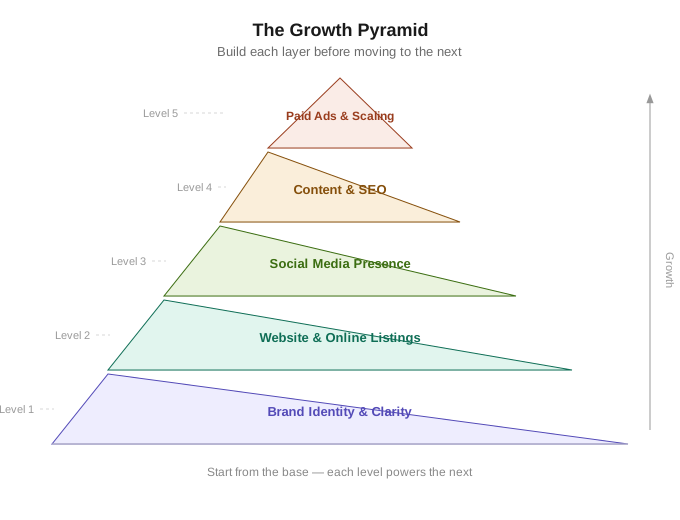
Skip a layer, and the whole structure wobbles. Build it right, and growth becomes compounding.
Let’s break each level down.
Level 1: Brand Identity & Clarity — Know Who You Are Before You Shout It
Before you run a single ad or post a single reel, answer these three questions:
- Who is your ideal customer? (Age, location, problem they need solved)
- What makes you different? (Not better — different)
- What do you want people to feel when they interact with your brand?
Why This Matters
Confusion kills conversions. If a potential customer lands on your page and can’t figure out what you do in 5 seconds, they’re gone.
Action Steps:
- Write a one-sentence brand promise (e.g., “We help Delhi-based home bakers sell online without a storefront.”)
- Choose 2–3 brand colours and fonts — and stick to them everywhere
- Define your tone: Are you professional? Warm? Witty? Urgent?
Level 2: Website & Online Listings — Your 24/7 Salesperson
Your website is your most valuable digital asset. Every other platform you build on — Instagram, YouTube, Google Ads — is rented space. Your website is owned real estate.
What Your Website Must Have
- A clear headline that communicates your value in one line
- A call-to-action above the fold (Book a Call / Buy Now / Get a Quote)
- Social proof — testimonials, client logos, case studies
- Mobile-optimised design (Over 70% of Indian internet users browse on phones)
- Fast load speed — every extra second costs you conversions
Don’t Overlook Google Business Profile
If you serve local customers, this is non-negotiable. A fully optimised Google Business Profile can put you in the Local 3-Pack — the top three results that appear on Google Maps.
- Add your business hours, photos, and services
- Respond to every review (yes, even the bad ones)
- Post weekly updates to signal activity
Stat to remember: Businesses with complete Google profiles receive 7x more clicks than those without.
Level 3: Social Media Presence — Show Up Where Your Customers Scroll
Here’s the mistake most founders make: they try to be everywhere. Instagram, LinkedIn, Twitter, YouTube, Pinterest — all at once.
The result is mediocre content on every platform rather than outstanding content on one.
The One-Platform Rule (At First)
Pick the one platform where your ideal customer spends the most time:
| Audience Type | Best Platform |
|---|---|
| B2C, lifestyle, local | |
| B2B, founders, professionals | |
| Gen Z, product demos, trends | YouTube Shorts / Reels |
| How-to content, older audience |
What to Post (The 3E Framework)
Every post should do one of three things:
- Educate — Share something your audience didn’t know
- Entertain — Make them smile, laugh, or feel something
- Engage — Ask a question, run a poll, start a conversation
Consistency beats frequency. Three excellent posts a week will outperform daily mediocre ones.
Level 4: Content & SEO — The Gift That Keeps on Giving
Paid ads stop the moment your budget runs out. Content? It works for you long after you’ve published it.
Why SEO Is Not Just for Big Brands
A well-written blog post targeting a specific search phrase can bring you free, qualified traffic for months or even years. This is called organic traffic — and it’s the holy grail of digital marketing.
Getting Started with SEO (Simply)
Step 1: Keyword Research
Find what your customers are typing into Google. Tools like Google’s free Keyword Planner or Ubersuggest can show you search volumes and competition.
Start with long-tail keywords — phrases that are specific and lower competition. For example:
- Instead of: “digital marketing”
- Target: “digital marketing tips for small bakeries in India”
Step 2: Create Content Around Those Keywords
Write blog posts, FAQs, or guides that directly answer what people are searching for.
Step 3: On-Page Optimisation
- Put your primary keyword in the title, first paragraph, and at least one subheading
- Write a compelling meta description (this appears in Google search results)
- Use internal links to connect related posts on your site
Step 4: Build Backlinks
Get other websites to link back to yours. Even a few high-quality backlinks can dramatically improve your Google ranking.
Level 5: Paid Ads & Scaling — Pour Fuel on a Fire, Not on Wet Wood
Paid advertising — Google Ads, Meta Ads, YouTube Ads — is powerful. But only if the four levels beneath it are solid.
Running ads to a slow, unclear website is like pouring fuel on wet wood. Nothing burns.
Once your foundation is ready, here’s how to start with paid ads wisely:
Start Small and Test
Don’t blow ₹50,000 on your first campaign. Instead:
- Start with ₹200–₹500/day on a single campaign
- Test 2–3 different ad creatives (images + copy) simultaneously
- Run for 7–10 days before making changes
- Track cost per click (CPC) and cost per conversion — not just likes
Retargeting: The Underused Power Move
Only 2–3% of visitors buy on their first visit. Retargeting ads follow users who already visited your website or engaged with your content, bringing them back when they’re ready to buy.
This is often the highest-ROI activity in digital marketing.
Real-World Example: From ₹0 Spent Online to ₹3L in Monthly Revenue
Ravi, a freelance graphic designer from Pune, had zero digital presence in early 2023. Here’s the 6-month playbook he used:
| Month | Action Taken | Result |
|---|---|---|
| 1 | Built a portfolio website + Google Business Profile | First 3 enquiries via Google |
| 2 | Started posting on LinkedIn (3x/week) | 500+ followers, 2 new clients |
| 3 | Published 2 SEO blogs targeting “logo design for startups” | Ranked on Page 1 within 60 days |
| 4 | Launched ₹300/day Meta ad campaign | 12 leads in 30 days |
| 5–6 | Added retargeting + email nurture sequence | ₹3L+ monthly revenue |
No agency. No massive budget. Just the pyramid — built one level at a time.
7 Quick Wins to Implement This Week
You don’t have to do everything at once. Start here:
- Set up or optimise your Google Business Profile — it’s free and high-impact
- Write your one-sentence brand promise and put it on your website’s homepage
- Choose one social media platform and commit to 3 posts a week for 30 days
- Research 5 long-tail keywords your customers are searching for
- Write one blog post targeting one of those keywords
- Collect 3 testimonials from happy customers and display them prominently
- Set up a simple email capture on your website (a free checklist works great as a lead magnet)
Conclusion: Growth Is a Decision, Not a Destination
The gap between a business that stays at zero and one that scales to six or seven figures is rarely about money or talent.
It’s about showing up with intention — consistently, strategically, and patiently.
Digital marketing is not a magic switch. It’s a compounding engine. Every blog post, every social media interaction, every optimised Google listing adds a brick to a wall that eventually becomes unbreakable.
The founders who win aren’t the ones with the biggest budgets. They’re the ones who started when they weren’t ready, learned as they went, and refused to stop.
You now have the map. The only thing left is to move.
Ready to Take the First Step?
Download our free “Digital Marketing Starter Checklist for Small Business Owners” — a step-by-step action plan that walks you through every level of the Growth Pyramid in just 30 days.
Download the Free Checklist— No fluff. Just a clear, actionable roadmap built for founders like you.
Or, if you’d prefer a personalised strategy session, book a free 30-minute consultation with a digital marketing expert who works specifically with small business owners.
Frequently Asked Questions
Q: How much should a small business spend on digital marketing?
Start with what you can afford to lose — think ₹5,000–₹15,000/month. Focus 70% on free channels (SEO, content, social) and 30% on paid ads once your foundation is ready.
Q: How long does it take to see results from digital marketing?
SEO typically takes 3–6 months for meaningful results. Social media and paid ads can show traction within 2–4 weeks if done correctly.
Q: Do I need to hire an agency to grow my business online?
Not necessarily. Many small business owners handle their own digital marketing in the early stages using free tools and strategic consistency. An agency becomes valuable once you’re ready to scale.
Q: What’s the single most important digital marketing channel for small businesses?
It depends on your audience, but Google (Search + Business Profile) is almost universally high-impact because it captures customers at the moment they’re actively looking for what you offer.
Q: How do I measure if my digital marketing is working?
Track these core metrics: website traffic, enquiry/lead volume, conversion rate, cost per lead (if running ads), and customer acquisition cost. Review monthly.